




Many students are confident when they first begin to learn about Data Insights (previously known as Integrated Reasoning) as it involves numerical calculations. However, they often lose points very easily. Data Insights tests how well you can interpret data in tables, graphs and short passages when under time pressure. Many candidates consistently make the same mistakes. Some of these include not keeping your revision guides updated and doing a whole GMAT Mock Test before your exam date. In this guide from 2026 we have listed the 5 mistakes that are easy to make in this section. We have explained them clearly and given you tips to help you improve your score. We also have the most up-to-date information on the GMAT Exam Fee, GMAT Exam Scoring and how it compares to the GMAT. Keep reading below to begin improving your GMAT Score.
What is the GMAT Data Insights Section?
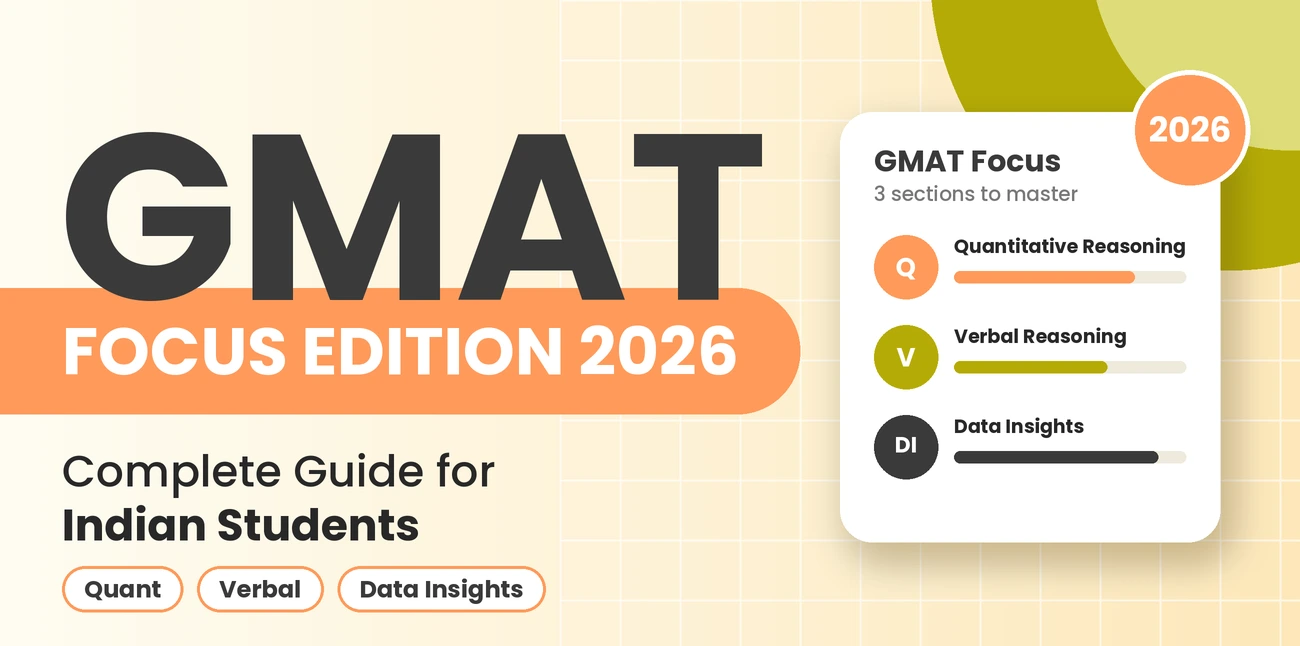
The GMAT Exam now uses the Focus Edition. In 2026, this is the only form of the GMAT that will be administered, with three 45-minute sections: Quantitative Reasoning, Verbal Reasoning, and Data Insights.
This section has 20 questions, and you have 45 minutes to complete. It covers Data Sufficiency, Graphic Interpretation, Two-Part Analysis, Table Analysis, and Multi-Source Reasoning. Your business school will use this section to assess how you read data and choose. And this is how the entire test looks:
Quantitative Reasoning: 21 questions, 45 minutes
Verbal Reasoning: 23 questions, 45 minutes
Data Insights: 20 questions, 45 minutes
Total time: 2 hours 15 minutes
The overall score ranges from 205 to 805; each section score ranges from 60 to 90. All Focus Edition scores are a multiple of 5. A lot of students also ask if there is an equivalent section on the GMAT Exam. There isn’t. The data interpretation questions are included in the GMAT General Test under the GMAT Quantitative Reasoning section.
Which of these is a common mistake students make in GMAT Data Insights Data Sufficiency questions?
Everything You Need to Know About the GMAT Exam
Get a clear picture of the GMAT Focus Edition sections, timing and scoring so you can plan your preparation with confidence.
Top 5 Mistakes You Make in GMAT Data Insights Section and How to Fix Them!
Mistake 1: Assuming it is a math test.
This is a very common mistake made by many Engineering and Commerce students. They get the idea that they are going to be able to rely on their math’s skills. The Data Insights section is actually a reading comprehension skill. You have to know which facts to extract from the tables, graphs and short texts. The answers are rarely calculated.
There are also calculators provided so you do not need to worry about showing that you can do lengthy calculations quickly. Focus on understanding the questions.
Fix – Always read the question first. Then only look at the information you require. This will save you time and reduce any silly mistakes.
Mistake 2: Actually Solving the Data Sufficiency
This is a very confusing question type for students. Many students waste their time solving it completely when all you need to do is determine if the information is sufficient. It is like being a detective. You don’t need to find out who did it just if there is enough evidence.
If you are looking for GMAT Sample Questions practice this skill. Try some Data Sufficiency questions. Write down why the statement is or isn’t sufficient. This will help increase your accuracy quickly.
Fix – Try solving each statement individually. If you need to look at both then do so. Always follow this process and it will become second nature.
Those studying for the GMAT Quantitative Reasoning section will not encounter this style of question. If you are planning on taking both exams then try practicing Data Sufficiency separately.
Mistake 3: Taking Too Long on Multi-Source Reasoning Questions
You have 45 minutes to answer 20 questions, with around 2 minutes and 15 seconds for each question. Multi-Source Reasoning questions often take much longer.
You may get 2/3 tabs of information. Many students will spend too much time reading through all the information and will not leave enough time for the final questions. This will affect your score!
The Focus Edition is a dynamic exam. This means the difficulty of questions will depend on how you have done in each section. So, getting off to a good start in the first section is key! Try to stay calm in the first 10 questions.
You can review up to 3 questions per section. Use this to your advantage. Flag up any questions that you weren’t sure on. Don’t panic and change your answers!
Where can you really test your timing? Take a GMAT Mock Test! Time yourself and take it in a quiet place to see exactly where you are losing time.
How to fix: Skim-read through the tabs to see what the headings / general titles are. Don’t go into detail unless the question relates to the information.
Mistake 4: Using Old Study Materials
This can be a costly mistake! There are many old books and videos online. Many will focus on the old format.
Many resources will focus heavily on the old Integrated Reasoning section. Ensure your resources will focus on the Focus Edition. This section has been replaced with Data Insights so the mix of questions has changed.
Where can you get reliable practice? Begin with an official GMAT Practice Test. Add some trusted third-party resources that clearly say they are for the Focus Edition.
If you want a free test, try out a Free GMAT Practice Test. This will show you what level you are at. You can see what areas you need to improve on before purchasing any books!
Check the scoring! You will not be using the old scoring system (200-800). Use a GMAT Score Calculator specifically for the Focus Edition. This should be using the new scoring system (205-805).
How to fix: Check the date and that it mentions Focus Edition.
Check Your GMAT Score in Seconds
Enter your practice test results and get an estimated GMAT score, so you know exactly how much improvement you need.
Mistake 5: Not doing Full Mocks & Not doing Sections in Order
Many students will do practice for each section but not do full mocks. Whilst you will feel confident initially you will struggle with time management and stamina on the day.
Doing a full length GMAT Mock Test will teach you how your brain works through all 3 sections and how to manage your 10-minute optional break. You will not learn this anywhere else!
Begin with a free full-length GMAT Mock Test to get your base score and know exactly what areas you need to improve on. Do one every week as the test date draws closer.
With the Focus Edition, you can choose which order you want to complete the sections in. Most students ignore this. Try different orders and see which one you perform best in.
Analyze your mocks carefully. Find out what was wrong and why you failed a question – because of conceptual misunderstanding, poor reading skills, or lack of time?
In case you are preparing for both GRE and GMAT, then you should prepare a separate schedule for your GMAT mock tests. GMAT and GRE tests are rewarding different abilities, hence combining them may slow you down.
How to solve this problem: Take a mock test once a week for the last 2 months. Spend more time on analyzing your mocks.
Which of these is NOT a question type in GMAT Data Insights?
GMAT Exam Fees and Dates for 2026
Fees for GMAT exam are the first thing many students will ask. The cost in India is USD 275 for center-based tests and USD 300 for online tests. The exact cost would depend upon the exchange rates at that particular point in time and would be in Rupees. It should be noted here that there is an additional 18% GST charged on the fees paid.
There are no set days for the GMAT exam to be taken by the GMAC. Therefore, you will have to book yourself in for an appointment. You can either take the exam offline in a test center or online. Refer to mba.com website and know the available dates in your city. Few seats are available during the period near application deadlines, so book well in advance.
There will be rescheduling charges that are frequently requested. The charges of rescheduling for USD 55 are made if it is rescheduled 15 days prior to the examination date or else USD 110 is charged. Remember your GMAT score is valid for five years.
Should you take GMAT Coaching?
A self-study course will do if you are a disciplined student, but if you lack discipline, structure, and regular practice, then taking up a course is the right option. Both can get you a good score. For GMAT Coaching in India, you may consider the following:
Batch Size – How big are the batches?
Faculty Experience – How experienced is the faculty?|
Coverage of Focus Edition – Does the course cover Focus Edition? Data Insights Practice – Does the course include practice for Data Insights? Many old courses don’t.
Depending on which city you are in, you’ll want to check-
Jaipur – Are the classes online/offline? Are there weekend batches for college students?
Pune – Are there mocks and doubt clearing sessions?
Hyderabad – What are the fees? Are there free trial classes? Can you verify their score improvements?
Chennai – Are the trainers experienced with Focus Edition?
For the Best GMAT Coaching in India, one should read recent reviews and take the free trial offered by the institute. One must ask for proof of score improvements from past students to verify their authenticity. The same should be done while finding the Best GMAT Coaching in Jaipur/Pune/Hyderabad/Chennai.
If you’d like to see what style of teaching, they have then book a GMAT Demo Class. Attend a Free GMAT Demo Class to see how clear the trainer explains the Data Insights concepts.
If you’re considering the GRE then check if they offer GRE Coaching. Some students will research GMAT vs GRE and having a good counsellor will help.
GMAT Coaching in India That Helps You Aim Higher
Learn with experienced trainers through structured classes, regular practice tests and personal doubt support, available online and offline.
8 Week Study Plan
Week 1/2: Get familiar with the 5 question types and do an initial Diagnostic test.
Week 3/4: Focus on Data Sufficiency and Table Analysis. Write out why you got each answer.
Week 5/6: Practice Multi-Source Reasoning and Graphics Interpretation with a timer. Try to get to around 2 minutes per question.
Week 7/8: Do weekly Full-Length Mocks. Go through each error and note any patterns in your notes.
Conclusion
Data Insights involves a lot of logic than complicated mathematics. These five mistakes can be prevented, which will help improve your GMAT scores. It has been suggested to take your time in reading the questions, be careful while solving the Data Sufficiency problems, and take care of the time management issues in Multi-Source Reasoning questions. Make sure that you always use the Focus Edition for studying.
It’s easy to make a regimen for yourself. Begin by taking a GMAT Practice Test to know your level. Then, take a Full-Length GMAT Mock Test each week. You are supposed to revise all mistakes made.
Before booking, always make sure you know the most up-to-date GMAT Exam Fee and how many places are available on mba.com. If you want advice, attend a GMAT Demo Class to compare your trainers fairly. If you are also considering taking the GRE Exam it is best to plan each exam.
Frequently Asked Questions
Depends on your strengths but students with poor reading speed or lack of practicing logic problems often struggle with this section.
No, the Analytical Writing Assessment has been dropped from the Focus Edition.
Start by taking a free GMAT Mock Test provided by an official or reliable provider. You can then move onto paying for the full GMAT tests.
Yes. You can send them. This site mentions you get five free score reports included in the registration fee. However, please double check this on mba.com.
Yes. You will be able to access an on-screen calculator on the Data Insights section. Unfortunately, you cannot use one on the GMAT Quantitative Reasoning section so you will need to work on your mental math’s skills here.
The total score runs from 205-805. Each section will be scored between 60-90. There is a GMAT Score Calculator specifically for the Focus Edition which will give a rough idea of what you might score after each practice test.
Your scores will be valid for 5 years after the exam. This leaves plenty of time to plan your MBA applications. Please check mba.com for the up-to-date rules.
No. There is no separate data section on the GRE. The data interpretation problems are included in the Quantitative Reasoning section. Therefore, you should revise separately for both exams.